


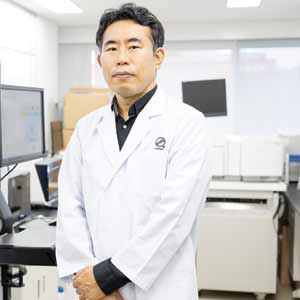
 Kinori Tomikane, CEO
It is now setting the pace for modernization within a very niche industry.
Traditionally, paternity tests have been postnatal, requiring a buccal swab from the newborn. Prenatal paternity testing methods, by contrast, were non-existent due to the substantial risks they posed to both mother and unborn child. The development of non-invasive prenatal paternity testing (NIPPT) revolutionized this narrative, offering expectant parents a safe and early determination of paternity. seeDNA, a Japanese DNA testing company, has carved a niche in this domain with an impressive 99.99 percent accuracy rate (Probability of Paternity) and a flawless track record across over 7,500 tests. It stands as the third company worldwide to innovate such a NIPPT solution.
So, what makes seeDNA different?
It lies in smartly analyzing a blood sample of approximately 20 milliliters. Paternity tests follow a rigorous double-testing protocol, and traditionally, laboratories used the entire sample in a single test, making retesting a challenge. seeDNA’s innovative system detect Minor Allele Frequency of cell-free-fetal DNA with high fidelity, making it one of its test’s biggest merits.
Adding to that is its proprietary technology to fine-tune the data analysis, allowing for the detection of minor allele frequencies as low as 0.5 to 1 percent within the DNA sample. seeDNA has developed four patented techniques for analyzing these minor alleles derived from cell-free-fetal DNA, underscoring its commitment to enhancing the test’s accuracy and reliability.
“As early as seven weeks into pregnancy, our technology can isolate distinct DNA strands from the mother’s blood, analyze them, and then compare them with the father’s DNA,” says Kinori Tomikane, CEO of SeeDNA.
For expectant parents seeking more than paternity verification, seeDNA is looking to expand its expertise to determine the baby’s health, including the assessment of any genetic disorders.
According to Tomikane, the market for non-invasive prenatal testing focused on detecting potential health concerns in the fetus is substantially larger than that for paternity testing, and seeDNA is set to embrace it.
In a move to catalyze industry-wide progress, seeDNA offers its services via two business models. One is as a distributor; it enables other companies to launch their NIPPT services by facilitating easy transfer of samples and delivering results. The other model offers DNA analysis outsourcing.
Both models help solve one of the primary challenges to NIPPT’s advancement—the absence of ready-touse commercial kits. Laboratories eager to offer NIPPT services must develop their own DNA analysis processes from scratch, which is a stark contrast to short tandem repeat (STR) forensic analysis as it is supported by various commercial kits and software. For NIPPT, laboratories must take a hands-on approach to develop these processes internally, a significant barrier to entry into the market.
The biggest advantage of seeDNA is calculating the fidelity of Minor Allele frequency to evaluate how reliable the cell-free DNA is for several applications
The future shines bright for seeDNA as it embarks on a journey to improve the image of paternity testing. This goal is supported by a forthcoming direct-to-consumer genetic testing service seeDNA plans to launch. The service will incorporate ancestry and health screening along with complementary paternity testing. By integrating paternity testing into a broader offering, seeDNA aims to normalize its use as a familial health tool.
With eyes set on expansion, ethical oversight remains paramount. As such, the company is ISO9001 certified, holds the Privacy Mark of Japan, and is a member of the Japan Association of Genetic Information. It is also on the cusp of acquiring AABB certification to extend its reach into the U.S. market. This commitment to ethics is enabling seeDNA’s testing services to earn the trust of doctors and patients worldwide.
seeDNA’s remarkable science is matched by its bold vision of a future where DNA testing sheds its stigma and takes its rightful place as a force for family empowerment and medical good. On that note, the company’s expertise in minor allele frequency detection is going to play a crucial role in the broader spectrum of early cancer detection, organ transplant compatibility, and infection diagnosis. With seeDNA leading the way, the future of ethical DNA testing looks promising.
