



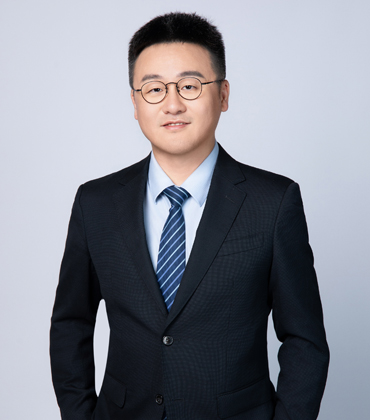
 Sean Xu, Managing Director
“Our services are designed as an interconnected quality lifecycle rather than siloed engagements,” says Sean Xu, Managing Director.
That model is backed by experienced QA professionals and leadership closely involved in shaping quality standards across APAC. It also draws on more than 441 GxP audits conducted between April 2020 and January 2026. The resulting proprietary database helps the team detect recurring vulnerabilities in complex oncology protocol execution, central lab data flows and computerized system compliance before they become inspection findings or delay study progress.
From Findings to System Change
An investigator site audit or service provider audit can uncover a systemic flow. Instead of treating this as an isolated finding, Beijing XiaoTongMingDa moves into for-cause investigation and issue management/CAPA, helping sponsors determine root cause and develop corrective actions. Lessons feed into risk management, cQMS improvement and targeted mentoring, turning a site-level error into a system upgrade.
The company adjusts quality-system work to support scale. Sponsor internal system audits examine protocol development, clinical study management and TMF management through senior management interviews and controlled document review. The resulting cQMS work is tailored differently for a local biotech and a multinational corporation, then reinforced through training intended to build capability beyond one study.
-
Our services are designed as an interconnected quality lifecycle rather than siloed engagements.
Delivering that customized approach depends on experienced, stable teams. Beijing XiaoTongMingDa’s QA professionals average 14.5 years of industry experience and 8.5 years in dedicated quality assurance, with experience hosting US FDA, EMA, NMPA and MHRA inspections. Only one employee left from 2019 through 2026, giving sponsors continuity with a strategic partner that retains knowledge of their pipelines and corporate cultures across engagements.
Inspection Readiness in Practice
A year-long EMA inspection-readiness engagement for a global life sciences client illustrates how this model works. The assignment covered two site inspections in China and Europe and one sponsor inspection in China. Led by Sean Xu and a European QA consulting partner, the programme combined mock inspections, readiness assessments, practical coaching, remediation planning, document review, interview preparation and inspection-readiness training.
During the inspections, its QA professionals provided on-site support, helping sponsor and site teams respond consistently to inspector requests. The inspections concluded successfully. “The result far exceeded our expectations and would not have been possible without the team’s dedication and professionalism. I am deeply grateful for its excellent work,” said the client.
Global Reach and Regulatory Depth
Beijing XiaoTongMingDa’s client base includes multiple global pharma companies, CROs, QA consulting firms and more than 60 biotech, biopharma and local CRO organizations across China, South Korea and the US.
First-time clients are often surprised by the company’s global reach and scalability. Despite being headquartered in China, it manages eight external QA consultants specializing in GCP, GLP, GVP and GMP across Australia, Japan, India, Singapore and China. Collaboration with QA consulting firms in the US and Europe further enables it to support global multi-regional clinical trials.
This specialist depth is reinforced by leadership’s active role in shaping the regulatory and quality landscape across APAC. Founder Hannah Chen established the China Quality Assurance Forum in 2010, while Sean Xu later served as chairperson from 2021 to 2023 and now leads its GCP sub-committee. Their involvement keeps the company close to evolving GxP standards and provides clients with timely regulatory insight, alongside audit experience.
That inspection readiness and auditing focus extends to technology. Beijing XiaoTongMingDa uses a GxP AI assistant for CAPA reviews, audit findings and RBQM output and framework. Built to GAMP 5, ICH E6(R3) and 21 CFR Part 11 principles, it runs on a private server with data isolation and mandatory human oversight.
For sponsors, this means a QA partner that uses audit evidence, regulatory insight and cross-border expertise to strengthen quality systems before inspections and apply lessons across clinical development programs.
Strengthening Clinical Quality Before Inspection Risk Escalates
Clinical trials across APAC are becoming harder to govern through audit activity alone. Sponsors increasingly coordinate studies across multiple jurisdictions while relying on CROs and specialized providers, including laboratories and technology vendors, that influence trial quality. Greater protocol complexity and growing use of computerized systems add further points of exposure. Differences in local execution can make a global quality framework uneven in practice, particularly when documentation or oversight and escalation paths are interpreted differently across markets. For executives choosing a clinical trial quality assurance partner, the central question is whether the provider can identify weaknesses early enough to protect study conduct, data reliability and inspection readiness.
Effective quality assurance begins with a risk-led view of where a trial is most vulnerable. Site audits remain important, but isolated findings offer limited value when the underlying problem sits in protocol execution or the quality processes governing vendors and internal teams. A strong provider should connect observations across studies and functions, recognize recurring patterns and focus attention where failure is most likely to affect subject protection or data reliability and regulatory acceptability. That requires experienced judgment supported by evidence rather than a checklist applied uniformly to every engagement. The provider also needs enough familiarity with complex trial environments to distinguish a local deviation from a broader system weakness. Without that distinction, sponsors may correct the visible symptom while leaving the source of recurrence untouched.
The next test is what happens after a weakness is identified. Audit reports can document nonconformities without materially improving the sponsor's quality system. Executives should favor providers that can trace issues to root causes, shape proportionate corrective and preventive actions and feed those lessons back into the sponsor's clinical quality management approach. Quality assurance becomes more valuable when findings influence risk management and training while strengthening future study controls instead of remaining confined to a completed audit. The same discipline should extend to service-provider oversight. A sponsor may delegate trial activity, but accountability for quality remains connected to how effectively external work is governed and how quickly concerns move into corrective action.
“Beijing XiaoTongMingDa Technology Ltd. treats quality assurance as an ongoing discipline rather than a final-stage inspection-readiness exercise.”
Inspection readiness also needs to be treated as an ongoing discipline rather than a final-stage exercise. Regulators may examine sponsor oversight together with evidence from sites, service providers and computerized environments. Preparation, therefore, depends on more than document completeness. Teams need clear ownership of evidence and confidence in explaining how quality decisions were made during the study. Providers need enough breadth to assess the systems surrounding a trial and enough regional fluency to work across APAC and global trial networks. Senior QA expertise matters most when it translates regulatory expectations into practical preparation and remediation without disrupting study progress.
Against these requirements, Beijing XiaoTongMingDa Technology Ltd. stands out as a premier choice for clinical trial quality assurance in APAC. Its offering extends from risk-based GxP audits and sponsor system assessments to cQMS evaluation, CAPA review, training and inspection-readiness work. The company draws on a database of more than 441 GxP audits and a senior QA team with industry experience. Its network also supports multi-regional trials across APAC, Europe and the US. This combination of risk insight and connected, inspection-focused quality management makes it especially well-suited to sponsors that need sustained quality oversight rather than a one-off audit.
...Read more
Clinical Trial Quality Assurance Service Providers in APAC Info
Q1
What Do Clinical Trial Quality Assurance Service Providers Cover?
Clinical Trial Quality Assurance Service Providers help sponsors assess whether trial processes, systems and external activities meet quality and regulatory expectations. Their work can include GxP audits, risk-based auditing, cQMS assessments, CAPA review, Quality by Design, training and inspection readiness. Clinical Trial Quality Assurance Service Providers can connect findings across functions instead of treating each audit as an isolated event.
Q2
How Does Beijing XiaoTongMingDa Technology Ltd. Apply This Approach?
Beijing XiaoTongMingDa Technology Ltd. incorporates auditing with other aspects of quality-system management and, since 2019, has combined cQMS development, Quality by Design, Risk-Based Quality Management, Risk-Based Auditing, CAPA review and training. The company's team carried out more than 441 GxP audits between April 2020 and January 2026, using the database obtained from these audits to detect recurring weaknesses in the execution of oncology protocols, in the flow of data from the central laboratory and in compliance with computerized systems. Thus, Clinical Trial Quality Assurance Service Providers are given a practical approach for linking audit evidence with system improvements.
Q3
Why Is Risk-Based Quality Important in Clinical Trials?
Clinical Trial Quality Assurance Service Providers use risk-based methods to focus attention on areas where weaknesses could affect subject protection, data reliability or regulatory acceptability. Rather than applying the same audit approach everywhere, quality teams can examine protocol execution, vendors, internal processes and computerized systems according to their exposure. This approach can help identify recurring issues earlier and direct corrective and preventive actions toward root causes.
Q4
What Should Sponsors Look for in a Quality Assurance Partner?
Clinical Trial Quality Assurance Service Providers should be able to move from findings to practical remediation. Relevant capabilities include site and service-provider audits, sponsor system assessments, issue management, CAPA, quality management support and inspection preparation. Experience across regulatory environments also matters when studies span multiple markets. The goal is to ensure that audit observations inform risk management, training and future study controls rather than remaining limited to a completed report.
Q5
How Does Beijing XiaoTongMingDa Support Inspection Readiness?
Beijing XiaoTongMingDa Technology Ltd. supports inspection preparation through mock inspections, readiness assessments, practical coaching, remediation planning, document review, interview preparation and training. In one year-long engagement for a global life sciences client, its work covered two site inspections in China and Europe and one sponsor inspection in China, with on-site support during the inspections. Its Clinical Trial Quality Assurance Service Providers approach also draws on QA professionals with experience hosting US FDA, EMA, NMPA and MHRA inspections.
Q6
How Can Quality Assurance Extend Across APAC Trial Networks?
Service providers specializing in clinical trial quality assurance can assist with coordinating quality supervision in cases where the studies span several jurisdictions, involve multiple contract research organizations, laboratories, and technology providers. To meet this demand, Beijing XiaoTongMingDa has eight external quality assurance consultants who cover GCP, GLP, GVP and GMP in Australia, Japan, India, Singapore and China, and also works in collaboration with quality assurance consulting firms in the United States and Europe. Its GxP AI assistant likewise helps with the review of CAPA items, audit findings and RBQM outputs under human supervision, thereby linking technology with existing quality procedures.
